

If you’ve searched “what is a gold number”, you’ve probably noticed something confusing right away. Some pages talk about numbers like 916, 750, and 585 stamped inside jewelry. Others dive into 1.618, the golden ratio, and the Fibonacci sequence. A few even mention business, finance, or ancient calendars.
So what does gold number mean, really?
The truth is simple: “gold number” isn’t just one thing. Its meaning depends on context. In jewelry, it usually refers to gold purity numbers. In mathematics, it often points to the golden ratio. Historically, it can even relate to calendar calculations. And in business or trading, the term sometimes appears in more informal ways.
This guide gives you the full explanation, clearly, naturally, and without jargon overload.
What Is a Gold Number?
At its core, a gold number is a numerical value associated with gold, either its purity, its mathematical proportion, or its symbolic significance.
Here are the three main meanings:
- Gold purity numbers stamped on jewelry (like 24K, 916, 750).
- The golden ratio (also called the phi number, approximately 1.618).
- The historical Golden Number used in ancient calendar calculations.
Because these meanings overlap in search results, people often ask:
- Is gold number the same as golden ratio?
- What is the value of gold number?
- What makes a number a gold number?
Let’s break it down step by step.
Gold Number Meaning in Jewelry and Gold Purity
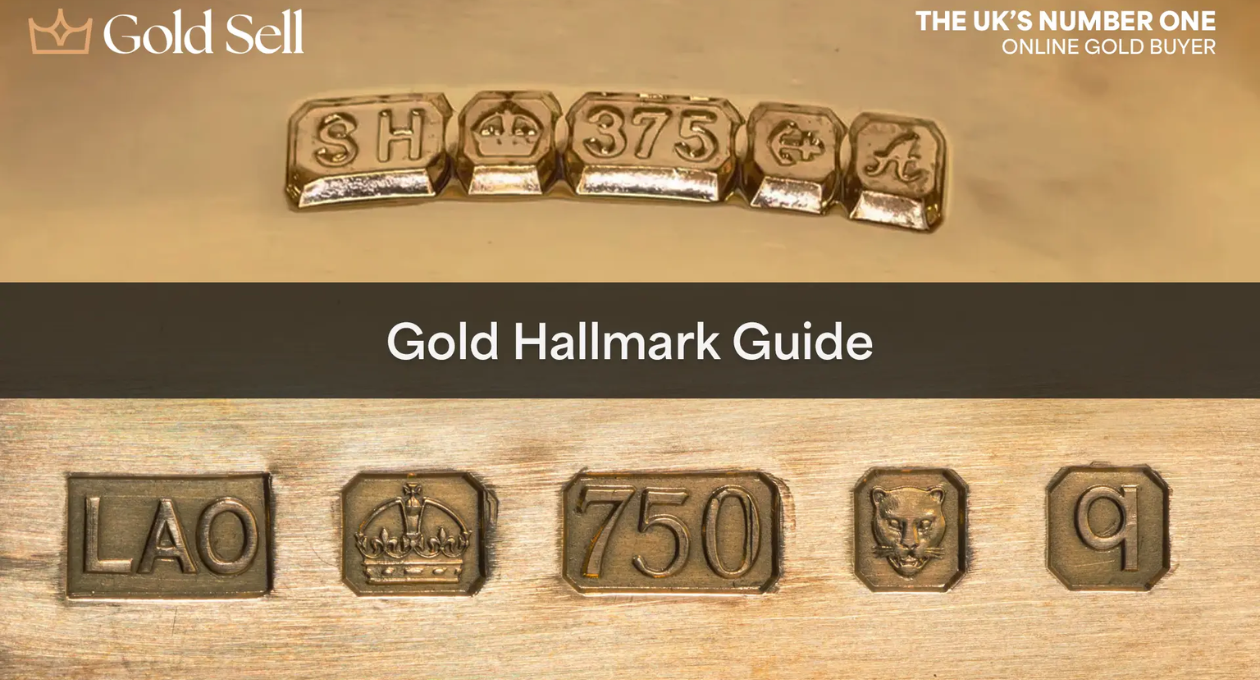
When most people search gold number meaning, they’re actually trying to understand the numbers stamped inside rings, necklaces, or bracelets.
If you’ve seen markings like:
- 999
- 916
- 917
- 750
- 585
- 417
Those are gold purity numbers.
Gold in its pure form is soft. To make it durable enough for everyday wear, it’s mixed with other metals. The number tells you how much real gold is in the piece.
Common Gold Numbers You’ll See on Jewelry
Let’s make this simple.
24K (999 or 999.9)
This means nearly pure gold, about 99.9% gold. It’s soft, bright, and often used for investment bars rather than daily-wear jewelry.
22K (916 or 917 gold)
This means 91.6% gold content.
If you’re wondering what does 917 gold mean?, it’s essentially the same as 916. Some regions round slightly differently, but it represents about 91.6–91.7% gold.
21K (875)
87.5% gold. Less common in some countries but still used.
18K (750)
75% gold. Very popular worldwide for fine jewelry because it balances purity and durability.
14K (585)
58.5% gold. Strong and widely used for engagement rings and everyday wear.
10K (417)
41.7% gold. More affordable, more durable, but less rich in color.
Now, what about 920?
If you’ve asked “what does 920 mean on jewelry?”, in most cases, 920 refers to silver purity, not gold. Sterling silver is typically 925 (92.5% silver). A 920 stamp often indicates 92% silver, not gold. This is a common source of confusion.
These markings are sometimes called hallmarks, and they’re regulated in many countries to protect buyers.
How Gold Number Calculation Works
Many people search:
- how to calculate a gold number
- what is the formula for gold number
- gold number calculation step by step
Here’s the simple formula for converting karat to percentage:
(Karat ÷ 24) × 100
Let’s see examples.
18K gold calculation:
18 ÷ 24 = 0.75
0.75 × 100 = 75%
That’s why 18K gold is marked as 750.
14K gold calculation:
14 ÷ 24 = 0.5833
≈ 58.5%
Marked as 585.
22K gold calculation:
22 ÷ 24 = 0.9166
≈ 91.6%
Marked as 916.
So when someone asks, what makes a number a gold number?, in jewelry terms, it’s simply the percentage of pure gold expressed either in karats or parts per thousand.
That’s the gold number explained simply.
What Is the Golden Number in Mathematics?
Now let’s switch gears.
In math, the gold number often refers to the golden ratio, also called:
- the phi number
- the 1.618 number
- the divine proportion
- the golden mean
The golden ratio equals approximately:
1.6180339887…
It’s an irrational number, meaning its decimal never ends and never repeats.
Mathematically, the golden ratio appears when a line is divided into two parts so that:
The whole length divided by the longer part equals the longer part divided by the shorter part.
It’s a beautiful example of ratio and proportion, studied in geometry and number theory.
The Fibonacci Sequence and the Golden Number
If you’ve searched what is gold number in Fibonacci sequence, here’s the connection.
The Fibonacci sequence is a number pattern where each number equals the sum of the two before it:
0, 1, 1, 2, 3, 5, 8, 13, 21, 34, 55…
When you divide consecutive Fibonacci numbers (like 34 ÷ 21 or 55 ÷ 34), the result gets closer and closer to 1.618.
That’s why the Fibonacci sequence is closely tied to the golden ratio.
This ratio appears in:
- spiral patterns
- golden spirals
- natural growth patterns
- flower petals
- shell formations
This connection gives the golden number its reputation for mathematical beauty, harmony, and symmetry in math.
Gold Number in Art, Design, and Architecture
The golden ratio didn’t stay in math books. Artists and architects embraced it.
You’ll often hear:
- golden ratio in design
- gold number in architecture
- golden proportion in buildings
- composition rule golden ratio
Many believe Renaissance artists used this proportion to create visual harmony and structural balance.
The golden rectangle, a shape whose sides follow the golden ratio, is considered aesthetically pleasing. Designers today still use it in:
- logo design
- web design
- UI design
- product design
- branding
- photography composition
- digital art
When photographers talk about the “composition rule golden ratio,” they’re referring to placing key elements along spiral or proportional guides to create balance and natural flow.
This is why the gold number is seen as a design principle, it creates visual proportion and harmony.
Gold Number in Finance and Business
Now let’s address another search variation: what is gold number in business or finance?
Unlike jewelry or mathematics, this meaning isn’t standardized.
In finance, “gold number” may refer to:
- benchmark gold prices
- pricing ratios
- trading thresholds
- gold purity in bullion trading
- premium number concept in valuation
For example, investors care deeply about:
- 24K gold purity
- gold price per gram
- gold price per ounce
Here, the gold number importance is tied to value and economics, not geometry.
In marketing or business strategy, the phrase might be used informally to describe a key performance figure, though this isn’t a technical definition.
The Historical Golden Number in Calendar Mathematics
There’s another meaning many people don’t know.
In ancient calendar systems, especially within Greek mathematics, the Golden Number was used to track the 19-year Metonic cycle of the moon.
It helped determine:
- Easter dates
- lunar phases
- calendar alignment
This historical gold number theory comes from classical mathematics proportion studies and was influenced by scholars like Euclid and Pythagoras, who explored number relationships deeply.
Gold Number vs Golden Ratio: Are They the Same?
This is one of the most common comparison searches:
- gold number vs golden ratio
- difference between gold number and golden ratio
The answer depends on context.
In mathematics, yes, “gold number” often means the golden ratio.
In jewelry, no, gold number refers to purity markings.
So when someone asks:
- what is the golden number in mathematics
- is gold number a constant
The answer is yes, in math, it’s the constant 1.618 (phi).
But in jewelry, it’s a percentage of gold content.
That’s why confusion happens.
Why Gold Numbers Matter in Real Life
So why is gold number important?
Because it affects:
- how much your jewelry is worth
- how durable your ring will be
- how artists design logos and buildings
- how investors price gold assets
- how mathematicians describe natural patterns
Understanding gold numbers helps you:
- buy jewelry confidently
- avoid confusing silver for gold
- appreciate proportion in design
- recognize real gold purity
- understand mathematical constants
It’s one of those terms that sits at the intersection of economics, geometry, art, and science.
What are the gold numbers?
In jewelry, the most common gold numbers are:
- 999 (24K)
- 916 / 917 (22K)
- 875 (21K)
- 750 (18K)
- 585 (14K)
- 417 (10K)
Each number represents the percentage of pure gold in the item.
In mathematics, the gold number usually refers to 1.618, the golden ratio.
What does 920 mean on jewelry?
In most cases, 920 refers to silver purity, about 92% silver.
It is not a standard gold purity mark. If you see 920, it’s likely silver, not gold. Gold purity numbers typically include 999, 916, 750, 585, and similar markings.
How much is 1 g of 24k gold?
The price of 1 gram of 24K gold depends on the live market rate, which changes daily.
Since 24K gold is about 99.9% pure, it trades very close to the global spot price of gold per gram. To get an exact figure, you would need to check the current gold market price on the day of purchase.
What does 917 gold mean?
917 gold means the item contains approximately 91.7% pure gold.
It is very close to 916 gold, which represents 22K gold (91.6% purity). The slight variation usually comes from regional stamping differences or rounding.
In practical terms, 916 and 917 gold are considered the same category: 22-karat gold.
Who Discovered the Golden Number?
If you’re asking who discovered the golden number, the honest answer is that no single person “invented” it.
The mathematical relationship we now call the golden ratio was studied in ancient Greece. The formal geometric description appears in Euclid’s work Elements, written around 300 BCE. He described it as dividing a line “in extreme and mean ratio.”
Later, Leonardo da Vinci famously illustrated the concept in Renaissance studies of proportion, helping connect it to art and anatomy. The term “divine proportion” was popularized during that era.
The symbol φ (phi) was adopted much later, named after the Greek sculptor Phidias, who was believed (though debated) to have used golden proportions in classical works.
So the origin of gold number in mathematics is ancient, but its name and fame grew over centuries.
What Is the Value of Gold Number in Math?
When someone asks what is the value of gold number, they’re usually referring to the mathematical constant.
The golden ratio equals:
1.6180339887…
It continues infinitely without repeating, which makes it an irrational number, similar to pi.
Unlike gold purity numbers (which are percentages), this gold number is a numerical constant used in geometry, algebraic formulas, and proportion rules.
It shows up in:
- dividing line segments
- constructing golden rectangles
- analyzing spiral formations
- studying natural patterns
That’s why many describe it as representing balance, harmony, and symmetry.
Is Gold Number a Constant?
The answer depends on context.
- In mathematics: yes. The golden ratio is a fixed mathematical constant.
- In jewelry: no. Gold purity numbers vary (999, 916, 750, etc.).
- In finance: no. Gold prices change daily.
So when comparing gold number vs e constant or gold number compared to pi, you’re really comparing the golden ratio to other mathematical constants.
In that mathematical sense, it absolutely qualifies as a constant.
Real-Life Examples of Gold Number
You might wonder: what is a gold number used for in real life?
Here are practical examples across different fields.
In Jewelry
- Determining resale value
- Checking authenticity
- Understanding durability
- Comparing investment-grade gold vs wearable gold
In Architecture
Many designers reference golden proportion when planning structural balance in buildings. Though sometimes overstated online, proportional systems influenced Renaissance and classical architecture.
In Photography
Instead of placing a subject directly in the center, photographers use golden spiral overlays or proportion grids to create natural visual flow.
In Logo and Web Design
Modern UI design and branding sometimes use golden ratio grids to guide spacing and layout. Whether strict or flexible, it helps maintain aesthetic rule consistency.
In Nature
The Fibonacci sequence and golden spiral are often cited in:
- sunflower seed patterns
- pine cones
- seashell curves
These patterns reflect efficient growth and natural proportion.
Gold Number in Modern Design and Digital Spaces
Searches like:
- gold number in UI design
- gold number in web design
- gold number in digital art
have grown in recent years.
Designers don’t always strictly calculate 1.618, but they use its underlying principle: balanced ratio and proportion.
In branding, the golden rectangle may guide:
- logo spacing
- typography ratios
- image cropping
- layout grids
This creates harmony without viewers even noticing why it feels “right.”
That’s the subtle power of the gold number concept in creative work.
Gold Number vs Fibonacci: What’s the Difference?
Another common confusion:
- gold number vs Fibonacci
They’re closely connected, but not identical.
The Fibonacci sequence is a number pattern.
The golden ratio is a constant.
When Fibonacci numbers grow larger and you divide consecutive numbers, the ratio approaches 1.618.
So Fibonacci is the pattern.
The golden number is the limit that pattern approaches.
Gold Number vs Silver Ratio
Some people also search gold number vs silver ratio.
The silver ratio is another mathematical constant (approximately 2.414), used in certain design traditions. It follows a similar proportion idea but produces a different geometric structure.
While the golden ratio is tied to phi (1.618), the silver ratio creates a different form of balance.
Both are studied in geometry concept discussions, but the golden ratio is more widely known.
What Is Gold Number in Science?
In science, the term isn’t typically formal unless referring to mathematics. However, scientists use the golden ratio when modeling:
- population growth patterns
- botanical arrangements
- natural spirals
- biological proportions
It’s not a scientific law, but it appears in enough patterns that it remains fascinating.
What Is Gold Number in Business Strategy?
In business or marketing contexts, “gold number” is often informal.
It might describe:
- a target revenue milestone
- a key performance metric
- a benchmark conversion rate
- a pricing sweet spot
There’s no strict gold number theory in economics, but the phrase sometimes represents a “valuable number meaning”, the metric that matters most.
What Is a Gold Number in Simple Words?
If you want the gold number explained simply:
- In jewelry, it’s a number that shows how pure the gold is.
- In math, it’s 1.618,, a special ratio found in patterns and design.
- In history, it was used to track lunar calendar cycles.
- In finance, it can refer to purity or pricing benchmarks.
That’s the gold number basics without math jargon.
Gold Number for Beginners and Students
If you’re learning this for the first time:
Think of gold numbers in two main buckets:
Bucket 1: Purity
- 24K = almost pure gold
- 18K = 75% gold
- 14K = 58.5% gold
Bucket 2: Proportion
- Golden ratio = 1.618
- Connected to Fibonacci
- Used in geometry and design
That’s your beginner guide to gold number, clear and practical.
