

Some poems explain themselves. Others demand that you feel them first.
“Do Not Go Gentle Into That Good Night” by Dylan Thomas belongs firmly in the second category. It’s short, repetitive, and emotionally charged, yet decades after it was written, people are still searching for its meaning, analyzing its lines, and quoting it in moments of grief, resistance, and existential fear.
This poem isn’t just about death. It’s about how humans respond to the idea of ending, whether quietly, or with defiance burning to the very last breath. That tension is exactly why the poem continues to matter, whether it’s studied in classrooms, shared at funerals, or echoed in modern films like Interstellar.
To understand why this villanelle still grips readers, you have to look at its message, structure, emotional core, and the deeply personal story behind it.
Do Not Go Gentle Into That Good Night
At its most basic level, Do Not Go Gentle Into That Good Night is a poem urging resistance in the face of death. But the simplicity of that idea hides a complex emotional and philosophical struggle.
The speaker isn’t calmly offering advice. He’s pleading. Commanding. Almost shouting.
The phrase “do not go gentle” suggests that death often arrives quietly, as something society encourages people to accept with dignity and calm. Dylan Thomas challenges that expectation. Instead of peaceful surrender, the poem demands conscious resistance, even if that resistance cannot change the outcome.
The “good night” is a metaphor for death, but it’s deliberately softened. Calling death a “good night” makes it sound natural, even comforting. The poem pushes back against that softness. Thomas doesn’t deny death’s inevitability, but he rejects the idea that it deserves cooperation.
This tension, inevitability versus defiance, is the emotional engine of the poem.
What the Poem Is Really About Beneath the Surface
Many readers ask, what is the poem about “Do Not Go Gentle Into That Good Night” really saying? The answer depends on how closely you listen to its emotional undercurrent.
The poem is not promising victory over death. It’s not pretending rage will save anyone. Instead, it argues that how we face death matters, even when the ending is fixed.
At its heart, the poem explores:
- The fear of fading quietly
- The pain of unfinished lives
- The human instinct to resist erasure
- The belief that awareness itself is worth defending
This is why the poem resonates across generations. Whether someone is facing illness, watching a loved one age, or grappling with mortality in abstract terms, the message feels personal.
Dylan Thomas and the Story Behind the Poem
Understanding the background of Do Not Go Gentle Into That Good Night deepens its emotional weight without reducing it to biography.
Dylan Thomas and His Poetic Voice
Dylan Thomas was known for poetry driven by sound, rhythm, and emotional intensity. His work often circles themes of life, death, memory, and time, not in a calm philosophical way, but with urgency and passion.
Unlike poets who favored restraint, Thomas leaned into excess. His language is lush, his repetitions intentional, and his emotional tone unapologetically loud.
That style is on full display in this poem.
A Poem Written for His Father
One of the most searched context questions is whether Do Not Go Gentle Into That Good Night was written for Dylan Thomas’s father. The answer is yes, and no.
The poem was written as his father, David John Thomas, was losing his sight and nearing death. While the poem does not mention him by name, the final stanza makes the personal connection unmistakable.
This personal motivation explains the poem’s intensity. The speaker isn’t offering abstract philosophy. He’s begging someone he loves not to disappear quietly.
That emotional urgency is why the poem feels less like literature and more like a last argument against the dark.
The Villanelle Form and Why It Matters
One reason this poem is so frequently analyzed in literary studies is its strict structure.
What Is a Villanelle?
A villanelle is a fixed poetic form made up of:
- 19 lines
- Five tercets followed by a final quatrain
- Two refrains repeated throughout
- A tight rhyme scheme
In Do Not Go Gentle Into That Good Night, the repeated lines are:
- “Do not go gentle into that good night”
- “Rage, rage against the dying of the light”
How Repetition Builds Emotional Pressure
Rather than feeling repetitive or decorative, the villanelle structure creates emotional compression. Each return of the refrain feels heavier than the last.
The repetition mimics obsession, the inability to let go. It mirrors how humans think when facing loss: returning to the same plea again and again, hoping it will finally be enough.
This is why the poem works so powerfully when read aloud. The structure itself becomes part of the meaning.
“Rage, Rage Against the Dying of the Light”, Meaning Explained
Few poetic lines are quoted as often as this one. People search endlessly for the meaning of “rage against the dying of the light”, and for good reason.
The “light” represents life, consciousness, identity, and presence. The “dying” of that light is not just physical death, it’s the slow dimming that comes with aging, regret, and loss of agency.
Rage, in this context, is not violent anger. It’s active awareness. It’s refusing to become passive as existence fades.
The repetition of “rage” emphasizes urgency. One rage isn’t enough. The speaker demands sustained resistance, not because it will change fate, but because it preserves dignity.
The Different Types of Men in the Poem
One of the most searched analysis topics involves the different groups of men described in each stanza. These figures represent universal responses to life and death.
Wise Men
Wise men understand that death is inevitable. They accept it intellectually. But they still resist because their words “had forked no lightning.” Knowledge alone doesn’t feel complete if it hasn’t left a lasting mark.
This stanza explores the regret of insight without impact.
Good Men
Good men are moral, decent, and well-intentioned. Yet they, too, resist death because they feel their actions weren’t enough.
Their “frail deeds” suggest that goodness alone doesn’t guarantee fulfillment. The poem acknowledges that even virtuous lives can feel unfinished.
Wild Men
Wild men live passionately. They seize joy and energy. But even they mourn time’s speed. Their regret is not caution, it’s the realization that pleasure doesn’t slow mortality.
This stanza captures the heartbreak of realizing too late how quickly life moves.
Grave Men
Grave men are closest to death. Their physical senses fade, but awareness sharpens. They see most clearly when they have the least time left.
This irony, clarity arriving at the end, is one of the poem’s most painful truths.
Together, these men show that no life path escapes regret, but every life still fights to be seen.
Major Themes in Do Not Go Gentle Into That Good Night
The poem’s themes are tightly woven, reinforcing each other rather than standing alone.
Death and Mortality
Death is unavoidable in the poem, but never romanticized. Thomas refuses the idea that death should be serene simply because it is natural.
Resistance as Human Instinct
The poem frames resistance not as denial, but as affirmation of life. Fighting death becomes a way of honoring existence itself.
Aging and Regret
The poem suggests that reflection intensifies at the end of life. Awareness sharpens, and with it, longing.
Light and Darkness
Light symbolizes life, expression, and meaning. Darkness represents erasure. The struggle between them is constant and unresolved.
Literary Devices That Give the Poem Its Power
The poem’s emotional force is amplified through deliberate literary choices.
Imagery
Light, night, lightning, blindness, these images are simple but loaded. They allow readers to feel abstract ideas physically.
Metaphor and Symbolism
Death as night is familiar, but Thomas uses it aggressively rather than gently. This twist keeps the metaphor from becoming sentimental.
Sound and Rhythm
The poem’s musicality isn’t accidental. The driving rhythm pushes the poem forward, mirroring urgency and resistance.
Why the Poem Still Matters Today
People continue searching for Do Not Go Gentle Into That Good Night because modern life hasn’t solved mortality. If anything, it’s made people more aware of time slipping away.
The poem speaks to:
- Aging populations
- Medical uncertainty
- Existential anxiety
- Fear of being forgotten
Its message doesn’t offer comfort through acceptance. It offers something else: permission to resist.
Do Not Go Gentle Into That Good Night in Interstellar
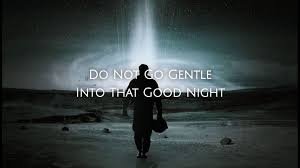
One reason younger audiences rediscovered the poem is its prominent use in Interstellar.
In the film, the poem represents humanity’s refusal to accept extinction. The message shifts from personal death to collective survival, but the emotional logic stays intact.
The poem becomes a mantra for persistence, not because victory is guaranteed, but because giving up is unthinkable.
This reinterpretation proves the poem’s flexibility and cultural endurance.
Common Misunderstandings About the Poem
Many readers misinterpret the poem as promoting anger or denial. In reality, it acknowledges inevitability while rejecting passivity.
It doesn’t argue that death can be defeated. It argues that conscious resistance preserves meaning, even in loss.
Is the Poem Asking Us to Fear Death or Face It Fully?
One of the most misunderstood aspects of Do Not Go Gentle Into That Good Night is the assumption that it’s rooted in fear. Many readers searching for the do not go gentle into that good night meaning expect the poem to be about terror, panic, or refusal to accept reality.
But the poem isn’t afraid of death, it’s intensely aware of it.
Dylan Thomas does not pretend death can be avoided. Instead, he treats it as something that deserves confrontation. The poem suggests that awareness itself is a form of dignity. To “go gentle” is not simply to die; it is to stop engaging, stop resisting, stop affirming one’s presence in the world.
In this way, the poem is not anti-death. It is anti-erasure.
The Father–Son Relationship at the Heart of the Poem
Although the poem speaks in universal terms, its emotional core becomes unmistakably personal in the final stanza.
The speaker directly addresses his father, urging him to fight against the fading of life. This shift from generalized examples, wise men, good men, wild men, grave men, to a single, specific person changes the tone completely.
At this moment, the poem stops being philosophical and becomes intimate.
The plea is not for immortality. It is for presence. Even if death is near, the speaker wants his father to remain fully himself until the very end.
This is why so many people encountering the poem during grief feel personally addressed. The poem captures a feeling most people struggle to articulate: the desperate wish that someone we love would stay just a little longer, just a little brighter.
Why the Repetition Never Feels Redundant
Repetition is one of the most searched literary features in the poem, especially among students asking about repetition in Do Not Go Gentle Into That Good Night.
The repeated lines serve multiple purposes at once:
- They reinforce urgency
- They create emotional escalation
- They mirror obsessive thought patterns
- They reflect the speaker’s inability to accept silence
Each time “Do not go gentle into that good night” returns, it lands differently. Early in the poem, it feels like instruction. By the end, it feels like a breaking point.
Similarly, “Rage, rage against the dying of the light” evolves from a general command into a deeply personal cry.
This emotional evolution is why the villanelle form doesn’t restrict the poem,it intensifies it.
Symbolism That Works Without Explanation
A major reason this poem continues to appear in search results is that its symbolism feels intuitive, even before analysis.
- Light represents life, consciousness, and identity
- Night represents death, silence, and disappearance
- Blindness represents physical decline but heightened insight
- Lightning represents impact, legacy, and visible meaning
These symbols don’t require academic unpacking to be felt. Readers understand them instinctively, which makes the poem accessible even to those who don’t usually read poetry.
This balance between depth and clarity is rare, and powerful.
Line-by-Line Meaning Without Killing the Emotion
Students often search for a line by line analysis of Do Not Go Gentle Into That Good Night, but the poem resists being dissected too mechanically.
Each tercet follows a pattern:
- A type of man is introduced
- His relationship to death is described
- His resistance is emphasized
This repetition reinforces the idea that no human experience escapes mortality, but every human experience still resists it.
The final quatrain breaks this pattern by focusing on the father directly. This structural shift mirrors the emotional shift from observation to confrontation.
The poem doesn’t end with acceptance. It ends with urgency.
Why the Poem Is Often Studied in Schools
The poem appears frequently in GCSE, AP, and university syllabi not just because of its form, but because it bridges emotional and technical analysis.
Students can study:
- Villanelle structure
- Rhyme scheme
- Metaphor and symbolism
- Repetition and sound devices
At the same time, they’re engaging with universal questions about life, death, regret, and resistance.
This dual accessibility is why the poem works equally well as an academic text and a personal comfort piece.
Do Not Go Gentle Into That Good Night as Existential Poetry
Many readers classify this poem as existential poetry, and that label fits, but not in a cold, philosophical way.
The poem does not ask:
“What is the meaning of life?”
It asks:
“What do we owe life when it is ending?”
The answer Thomas suggests is not peace, but engagement. Not silence, but voice. Not surrender, but presence.
This is why the poem resonates in moments of crisis, personal or collective.
How Modern Readers Connect to the Poem
Today’s readers encounter Do Not Go Gentle Into That Good Night in contexts Dylan Thomas never imagined:
- Hospital rooms
- Climate change debates
- Space exploration narratives
- Conversations about aging populations
Despite the changing context, the core emotion remains unchanged. The poem speaks to the human instinct to resist fading into irrelevance.
It reminds readers that even when control is lost, response remains a choice.
Why This Poem Endures While Others Fade
Many poems about death aim for consolation. This one offers honesty.
It does not promise peace.
It does not promise reunion.
It does not soften reality.
Instead, it validates struggle.
That validation is why readers continue searching for the meaning, themes, and interpretation of Do Not Go Gentle Into That Good Night. The poem doesn’t resolve grief, it stands with it.
The Poem’s Place Among Other Death Poems
Compared to other famous poems about mortality, Dylan Thomas’s work stands out for its intensity.
Where some poets lean toward acceptance, Thomas leans toward confrontation. Where others soothe, he provokes.
This makes the poem unforgettable, not because it answers questions, but because it refuses to let them fade quietly.
Why Do Not Go Gentle Into That Good Night Became Iconic in Interstellar
One of the most searched modern connections to the poem is its use in Christopher Nolan’s Interstellar. People often look up “Do not go gentle into that good night Interstellar meaning” or “what is the famous poem in Interstellar” after hearing Michael Caine’s character recite it.
In the film, the poem is used as more than background poetry. It becomes a mission statement.
Humanity, facing extinction, is urged not to accept its end quietly. The poem’s message about resisting death is reframed as resisting planetary collapse, extinction, and the limits of time itself.
What makes the poem work so well in this context is that:
- The language is urgent, not sentimental
- The repetition mirrors desperation
- The theme of light versus darkness fits cosmic imagery perfectly
The poem’s emotional power scales upward. What once applied to a dying father now applies to an entire species.
That adaptability is rare, and it’s why the poem keeps reappearing in modern culture.
The Villanelle Form and Why It Intensifies the Message
Many readers first encounter the term villanelle because of this poem. Searches like “do not go gentle into that good night villanelle” and “villanelle poem example” spike year after year.
A villanelle is defined by strict repetition and structure:
- Five tercets followed by a quatrain
- Two repeating refrains
- A tight rhyme scheme
On paper, this sounds limiting. In practice, it becomes emotionally suffocating, in the best way.
The speaker cannot escape the repeated lines, just as he cannot escape death. The form itself becomes a metaphor for inevitability.
Each return to the refrain feels heavier. By the final stanza, the repetition feels less like poetry and more like insistence.
This is structure doing emotional labor.
Wise Men, Good Men, Wild Men, Grave Men, Why These Categories Matter
One of the most analyzed aspects of the poem involves the four types of men mentioned in the tercets. Searches like “wise men do not go gentle meaning” or “wild men do not go gentle explanation” show how deeply readers engage with these distinctions.
These figures are not literal archetypes. They represent different ways of living, and different kinds of regret.
- Wise men know death is inevitable, but feel their knowledge lacked impact
- Good men mourn that their actions didn’t shine brightly enough
- Wild men realize too late that joy passed quickly
- Grave men, even near blindness, still see meaning
The message isn’t that one way of living is superior. It’s that everyone, regardless of how they lived, resists disappearing without leaving something behind.
This universality is what keeps the poem from becoming moralistic.
“Rage Against the Dying of the Light”, Not Anger, but Energy
Another common misunderstanding appears in searches like “rage against the dying of the light meaning”. Many readers assume “rage” refers to anger or bitterness.
In reality, the word functions more like intensity.
Thomas isn’t advocating resentment toward death. He’s urging emotional and existential engagement , refusing numbness.
“Rage” here means:
- Staying mentally present
- Feeling deeply rather than shutting down
- Affirming life even as it ends
It’s closer to fire than fury.
The Poem as a Study of Aging, Not Just Death
While death dominates most interpretations, the poem is just as much about aging. Readers often connect with it during moments of decline rather than finality.
Loss of strength. Loss of relevance. Loss of autonomy.
The poem insists that even as the body weakens, the inner self does not have to dim.
This is why the poem resonates with older readers as much as grieving ones. It validates resistance without denying reality.
Why Students Keep Searching for This Poem
Searches like “do not go gentle into that good night GCSE” or “do not go gentle into that good night exam analysis” remain consistently high.
But what keeps students engaged isn’t just curriculum pressure. It’s that the poem doesn’t talk down to them.
It treats death, fear, and resistance as real, not abstract. It respects the reader’s emotional intelligence.
That’s rare in assigned literature.
How the Poem Balances Hope Without Promising Comfort
One reason this poem continues to outperform other death poems in search and discussion is that it doesn’t offer false comfort.
There is no afterlife described.
No reunion guaranteed.
No resolution provided.
And yet, the poem feels hopeful.
That hope comes from agency, the belief that how we face the end matters.
The Last Stanza and Why It Breaks Readers
When the speaker turns directly to his father, the poem abandons distance.
The tone shifts from observation to pleading. From theory to desperation.
This is the moment readers remember most.
It’s also where many realize the poem isn’t about defying death forever, it’s about refusing emotional silence.
The poem ends not with closure, but with insistence.
Why This Poem Still Matters Now
In an era shaped by uncertainty, climate anxiety, global crises, personal loss, the poem feels newly relevant.
It doesn’t tell readers to be calm.
It tells them to be awake.
That message never expires.
Philosophical Reflections: Life, Death, and Human Defiance
One reason people continue to search for “do not go gentle into that good night meaning” or “poem about resisting death” is the existential weight the poem carries. It asks fundamental questions:
- What does it mean to truly live?
- How do humans confront their mortality?
- Can defiance give life more meaning, even in the face of death?
Thomas doesn’t provide easy answers. Instead, he frames mortality as both inevitable and meaningful. The struggle itself, the “rage”, becomes a measure of life’s intensity.
This is why many scholars classify the poem as existential. Unlike other mortality-themed works that mourn death quietly, Thomas celebrates the act of conscious resistance. The poem invites readers to consider that dignity is not in surrender but in presence.
Literary Techniques That Amplify the Message
Thomas’s genius lies not just in the emotion of his words, but in the meticulous crafting of poetic techniques that reinforce the theme. Readers often search for “Do Not Go Gentle Into That Good Night literary analysis” or “poetic devices in Do Not Go Gentle Into That Good Night”, and understanding these devices enhances the depth of the poem:
- Metaphor: Light and darkness represent life and death, but also consciousness and fading influence.
- Repetition: The two repeating refrains create a sense of urgency and inescapability.
- Imagery: Vivid descriptions of men at different life stages make mortality personal and tangible.
- Sound devices: Assonance, alliteration, and the rhythmic iambic pentameter echo the heartbeat of struggle.
By combining form, sound, and imagery, Thomas ensures that the poem’s message isn’t just read, it’s felt.
Understanding the Different Types of Men in the Poem
A central analytical point is the way Thomas categorizes men: wise, good, wild, and grave. These aren’t mere archetypes; they reflect universal human attitudes toward life and death:
- Wise men: Though intelligent and insightful, they regret that their knowledge could not fully shape the world.
- Good men: Moral and compassionate, they wish their deeds had produced more lasting impact.
- Wild men: Free-spirited and adventurous, they realize too late that pleasure and vitality are fleeting.
- Grave men: Serious and contemplative, often near blindness, yet aware that life still demands engagement.
Each category illustrates a different dimension of human life, the poem’s universality lies in its ability to speak to all readers, regardless of personality or experience.
Interpreting the Poem in Modern Contexts
Modern readers are drawn to this poem because it feels timeless. People search for “poem about fighting the end” or “poem about mortality and life”, seeing Thomas’s work as relevant to contemporary struggles:
- Aging populations: The poem resonates with older adults confronting the approach of death.
- Grieving families: Parents and children often find solace in the poem’s insistence on presence and love.
- Cultural crises: From climate change to global conflicts, the poem’s call to resist passivity mirrors societal struggles.
- Film and media: As in Interstellar, the poem has been repurposed to inspire courage in extreme circumstances, demonstrating its emotional adaptability.
The ability to transcend context while maintaining intensity is why searches remain high decades after its publication.
Comparing Thomas with Other Death Poems
Students and literature enthusiasts often search for “poems about death like Do Not Go Gentle” to understand Thomas’s uniqueness. Compared to other mortality poems:
- Robert Frost tends toward meditative acceptance.
- Emily Dickinson examines death as a personal, often quiet, journey.
- Thomas insists on confrontation, presence, and intensity.
This defiance sets Thomas apart, his poetry doesn’t console with passivity; it demands engagement.
Why the Villanelle Form Matters for SEO Readers
The poem’s form, a villanelle, is more than a technical footnote. Searches like “villanelle structure Do Not Go Gentle” and “repetition in villanelle poetry” show the continued curiosity about how form impacts meaning:
- Rigid repetition mirrors life’s unavoidable constraints.
- Circular refrains evoke the persistence of memory, consciousness, and resistance.
- Tight rhyme scheme creates momentum and emotional intensity.
In short, the form amplifies the content. Every repeated line reinforces the urgency of resisting silence.
Emotional Takeaways for Modern Readers
The emotional impact of Thomas’s poem cannot be overstated. Terms like “poem about refusing to give up” and “existential poetry Dylan Thomas” highlight why readers seek it during moments of vulnerability:
- It validates grief without offering easy answers.
- It frames mortality as a stage for conscious action.
- It reminds readers that courage can exist even in the smallest acts of presence.
This emotional resonance explains why the poem dominates both academic searches and casual cultural references.
